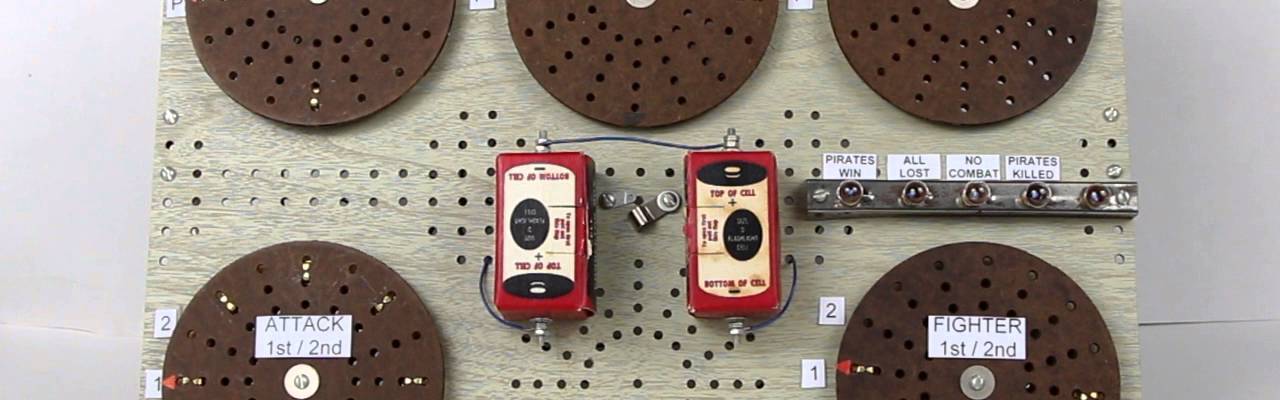
There were home computers BEFORE the Altair 8800 and even the Kenbak-1? It’s true! Even in the computer’s earliest days, attempts (some successful!) were made to bring the concepts of computing to experimenters and hobbyists at home. Large, expensive analog computers could be had for the serious experimenter with cash to burn, and for those just looking to explore basic concepts, cheaper methods, some even involving paperclips and empty thread spools, could make computing come alive. In this episode, Jason Dyer returns to the podcast to discuss all of these wonderful, clever early devices and give them their due.
Be sure to check out Jason’s INCREDIBLE blog at Renga in Blue!
As always, you can fine Nate on Mastodon, Instagram, and Twitter.
https://oembed.libsyn.com/embed?item_id=27115707
LOTS of show notes on this one, so please, check all of this out!
Giant Brains, or Machines that Think by Edmund Berkeley, is available for free through Project Gutenberg. Try building his design, Simon, if you have oodles of free time!
Geniac / Braniac, was Edmund Berkeley’s follow-up to Simon, designed with partner Oliver Garfield. Brian Moriarity has lectured about this device extensively, and these can be found on YouTube:
A video of the Digi-Comp I in action:
And here’s demonstrations of the follow-ups, including the completely brilliant Dr. Nim.
Here’s a demonstration of a Heathkit EC-1 analog computer. There’s a few such demonstrations of analog computers to be found on YT, but this is one that you could conceivably buy for your home.
A manual for something a bit more intricate than the Calculo, but nonetheless built off the same basic principals, can be found here on the Internet Archive.
The Internet Archive also houses How to Build a Working Digital Computer by Edward Alcosser, James P Phillips, and Allen M Wolk. It’s absolute madness, and I would definitely encourage a quick look through. When you’re done doing that, please check out Michael Gardi’s work replicating the designs on HackADay.
 The Memory Machine Podcast